Summer Internship in Harvard Library Preservation Services: Lua Powers
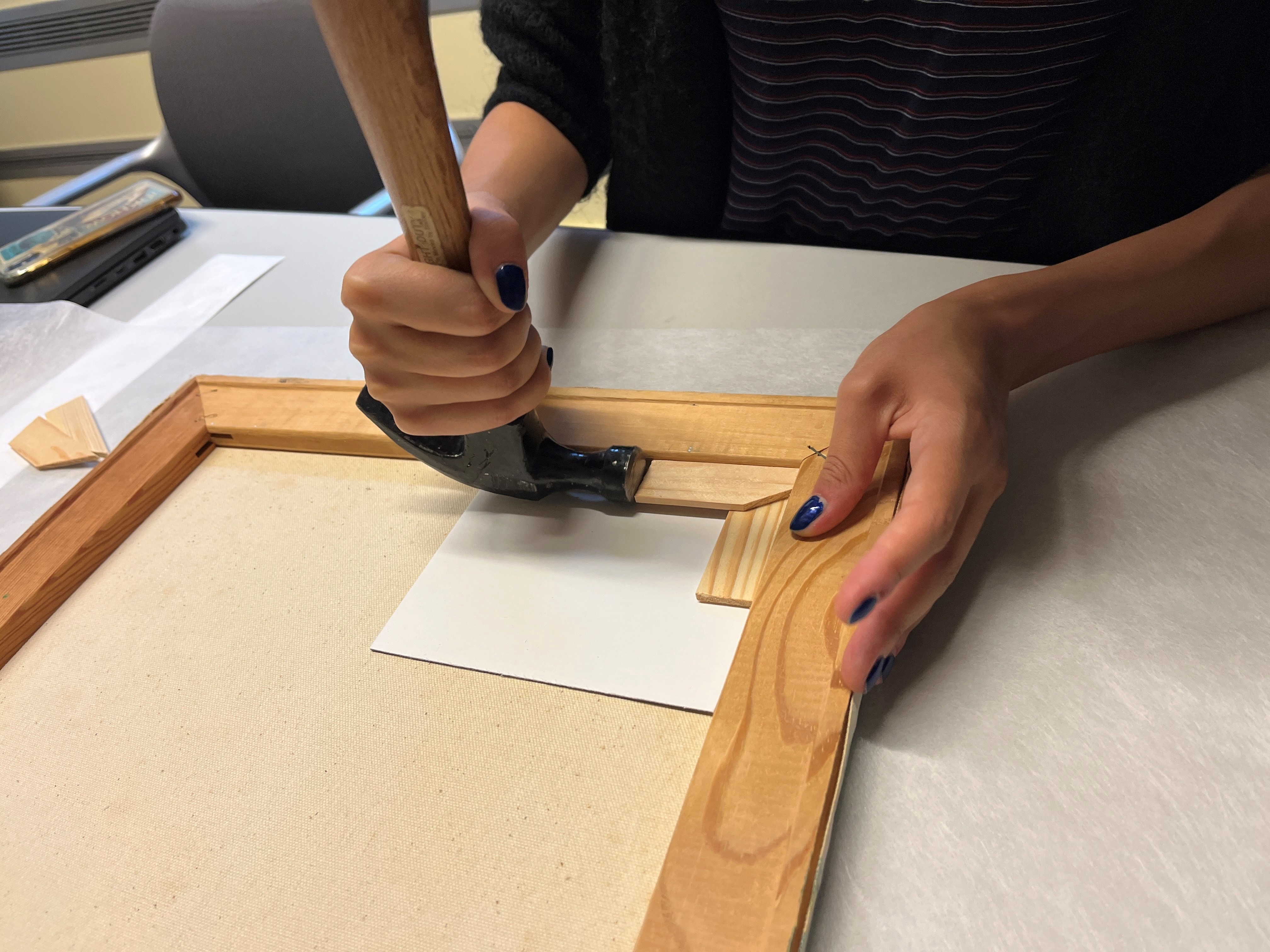
I feel massively privileged to have had the opportunity to intern with EDIBA and the library Conservation/Preservation teams at Harvard, especially with my lack of experience in that particular field. Before my time with EDIBA, I had a few years of experience working in archives and keeping general maintenance with items. Over the summer, I dove deep into the fundamentals of conservation and preservation, which were chemical, digital, and philosophical. As part of my internship, I brought a painting made by a family member from home to put through the conservation and preservation process. It had spent years sitting in storage collecting dust, after 8 weeks it returned home in a custom enclosure ready to be displayed according to conservation standards. I also had the opportunity to try out the many different types of preservation including physical, AV, and digital artifacts.
When I worked with physical media in the Weissman Preservation Center and the Houghton basement, I learned how items are categorized by what repairs are deemed fit for preservation. The goal is never complete restoration, but making reversible alterations to make the item last for as long as deemed necessary. In the Weissman Center, I saw a book with severe damage from being eaten by beetles and the material used that fits itself in the holes while obtaining the shape left behind by the pests. When working in digital preservation, I learned that the goal is not to digitize physical items but to manage and ensure access to digitized and digital-born materials for as long as necessary. A roadblock many digital preservation services face is explaining the timeline of digital preservation in a way that is accessible, especially when it comes to rights, equipment, and digital life-span. Despite popular belief, something that is digital will not last forever. It will take time, resources, and energy to maintain. Out of the multiple agents of degradation I had learned in conservation, I realized the biggest agent is not an elemental agent, but simply neglect. This brought the whole idea of archives back to me. We are looking at the condition of artifacts, how artifacts can be presented, what should be presented, and what narrative we are trying to tell.